The Hidden Yield Killer: Rodents in Agricultural Fields
Rodents, such as field mice and voles, are among the most underestimated threats in agriculture. Despite their small size, their impact on crop production can be devastating.
According to the Food and Agriculture Organization, pests (including rodents) are responsible for up to 20–40% of global crop losses annually. In severe infestations, rodents alone can destroy 5–15% of total yield, and in extreme cases, even more. Especially in crops like wheat, corn, and sunflowers.
Rodents damage crops by:
- Feeding on seeds and young plants
- Burrowing and destroying root systems
- Creating uneven plant density across the field
The result? Reduced yield, inconsistent crop development, and significant financial losses.
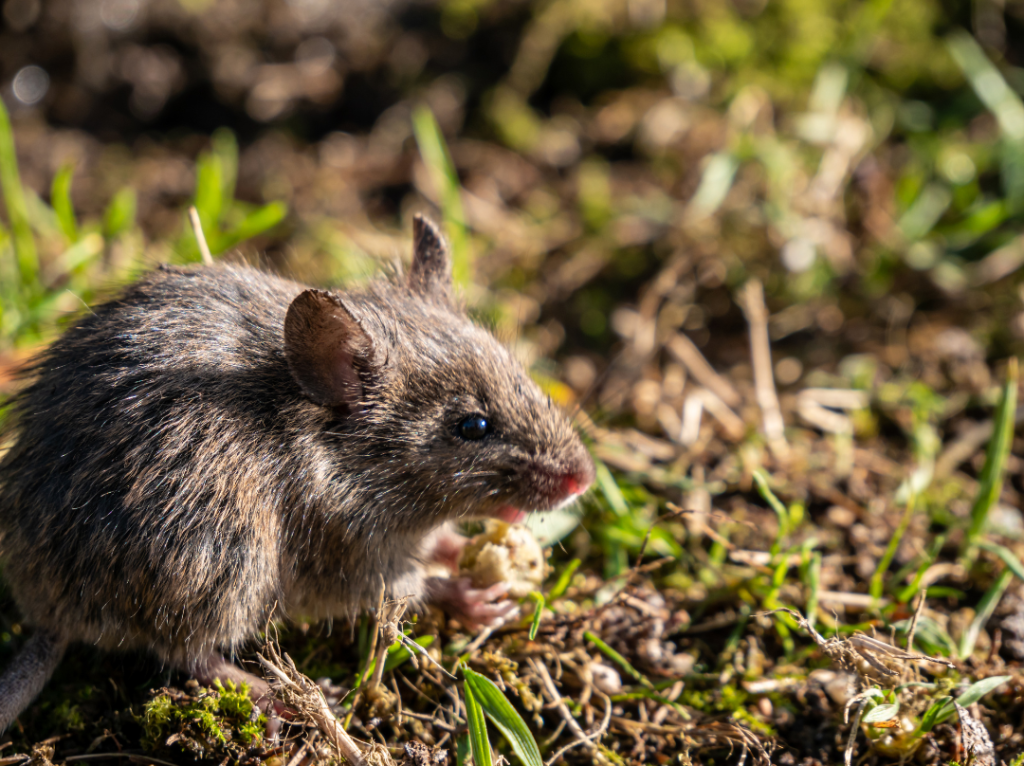
Traditional Approach: Time-Consuming and Inaccurate
Today, rodent damage detection is still largely manual.
Farmers typically:
- Walk or drive through the field
- Visually identify damaged areas
- Randomly distribute rodent control substances
Key Challenges of the Traditional Method
- ❌ Low accuracy – damage is often missed or underestimated
- ❌ Random application of rodenticides – leading to overuse or under-treatment
- ❌ High labor costs – multiple people required
- ❌ Time-consuming scouting – hours spent covering large fields
Even with significant effort, farmers cannot guarantee full field coverage or precise intervention.
A Smarter Approach: Drone-Based Rodent Damage Detection
This is where precision agriculture changes the game. Our partner Agrimetrix, a Drone Service Provider (DSP), implemented a data-driven workflow using Agremo to help farmers detect rodent damage faster and more accurately.
Step-by-Step Workflow
- Field Mapping
The field was mapped using the DJI Mavic 3 Multispectral (M3M), utilizing only the RGB camera. - Automated Processing
After uploading the data, Agremo performed image stitching, creating a high-resolution map of the entire field. - Damage Detection (10 minutes total)
Using the platform, the operator:
- Visually identified rodent damage zones
- Marked each location using simple point annotations
Time required: just 10 minutes
- Data Export for Field Action
The Annotation & Measurement Report provided:
- 📄 PDF report – with mapped damage locations and coordinates
- 📊 CSV file – precise GPS coordinates of each point
- 🌍 KML file – ready for navigation in the field
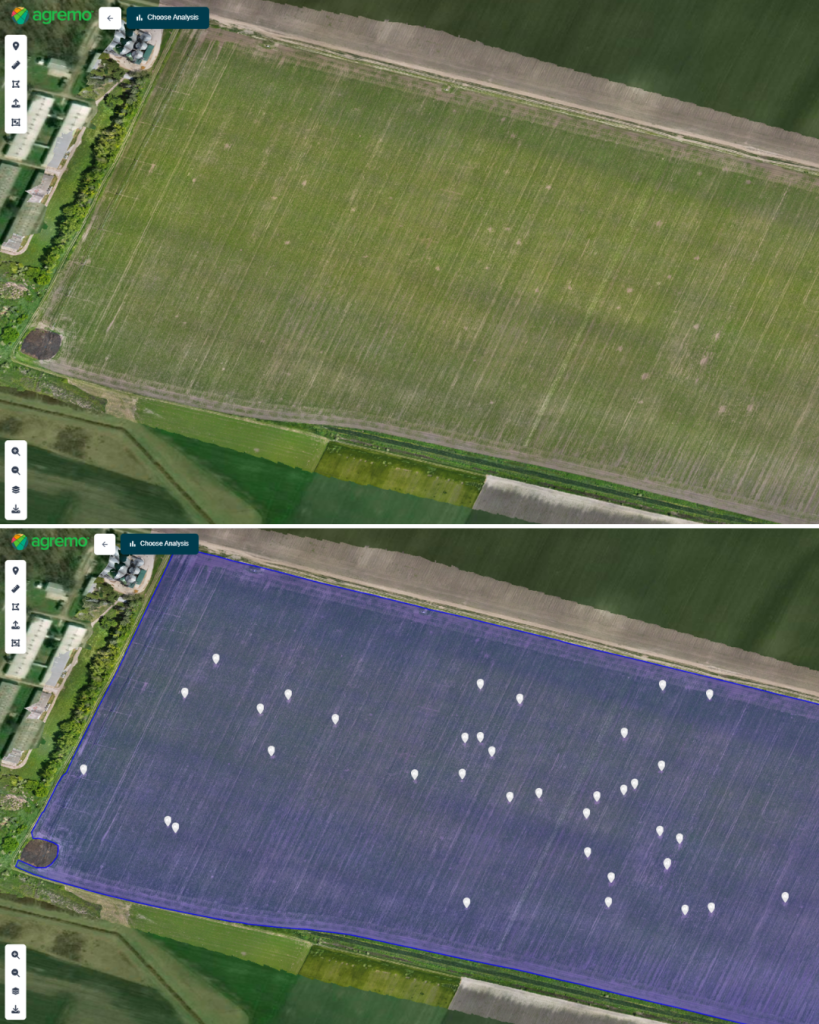
With accurate coordinates in hand, the farmer could:
✅Navigate directly to affected areas
✅Apply rodenticides only where needed
✅Eliminate unnecessary field coverage
✅Precisely estimate the required amount of rodenticide based on the number and distribution of detected damage points
This means farmers not only act faster, but also avoid overuse or shortages of rodenticide, making the entire process more cost-efficient and environmentally responsible.
Efficiency Gains: Before vs After Agremo
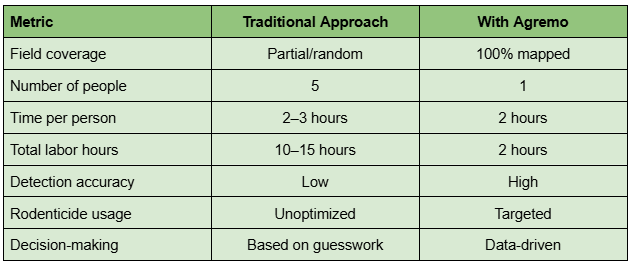
Up to 7.5× reduction in labor effort, with higher accuracy.
What Our Partner Says
“In modern agriculture, efficiency is everything. Rodent damage is not just a biological issue—it’s an operational and economic challenge.
Before using Agremo, a lot of time was spent simply searching for the problem. Now, we can move straight to solving it.
With Agremo, we quickly identify exact locations of damage, reduce time in the field, and optimize how resources are used. It allows us to deliver faster, more precise, and more valuable insights to our clients.”
— Goran R. & Slobodan J., Agrimetrix – Drone Service Providers